
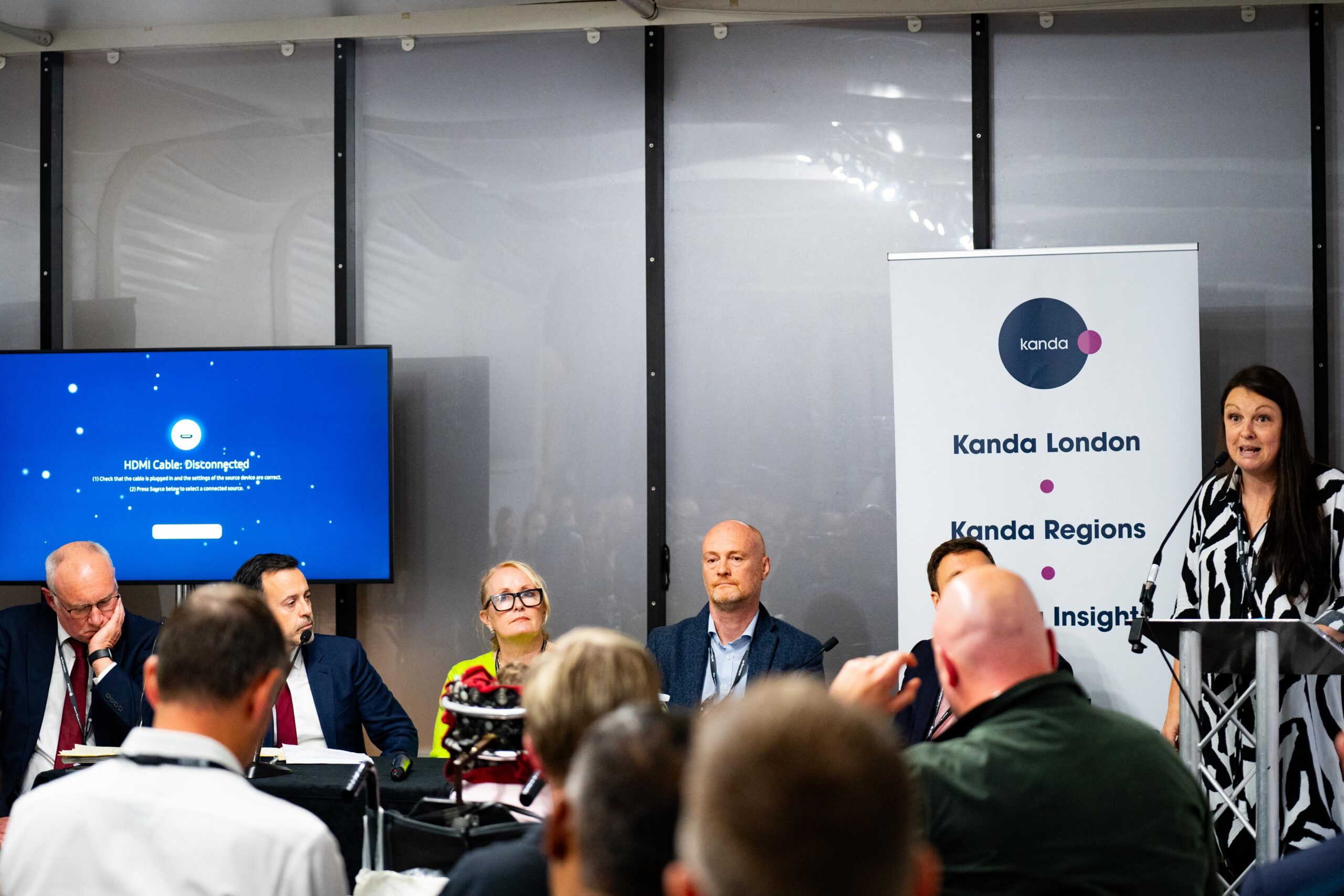
SME4Labour and Kanda Consulting Fringe: Unlocking Regional Growth and Placemaking – How Can Labour Deliver Homes and Sustainable Communities?
The panel, chaired by Jo Dancy, Director of Regions at Kanda Consulting, took place during the Labour Party event to discuss the role of Labour in delivering sustainable communities and homes, focusing on regional growth and placemaking. The panel comprised key political figures and experts in housing, local government, and urban planning. The discussion centered on the challenges and opportunities in meeting housing targets, the importance of sustainable and affordable housing, and the need for strategic regional planning. Key Takeaways:
- A strong commitment to building more social and affordable homes is crucial for community well-being and meeting housing targets.
- Infrastructure investment, strategic planning, and bold policy decisions are needed to ensure sustainable regional growth.
- The housing sector must address skills gaps and develop new methods of construction to support ambitious building targets.
Panel Highlights and Key Topics
-
The Ambitious Housing Agenda and Planning Challenges:
- Jo Dancy opened the session by addressing recent changes in UK housing policies and planning, including the proposed reforms to the National Planning Policy Framework (NPPF), green belt reviews, and the introduction of brownfield and gray belts.
- The discussion kicked off with panelists addressing the most important steps Labour can take to facilitate housing delivery and how policy reforms will impact regional housing targets and sustainable growth.
-
Need for More Social Housing and Consistent Policies:
- Fiona Fletcher Smith, CEO of L&Q, emphasized the importance of social housing as the foundation for community well-being. She noted that 151,000 children are homeless in the UK, with 1 in 23 children in London living in temporary accommodation.
- Smith’s key asks for Labour were:
- A stable rent formula to support housing associations in building homes.
- Access to the Building Safety Fund for social housing.
- Continued access to the Social Housing Decarbonization Fund to support retrofitting.
- She stressed the importance of meeting housing targets with sustainable, affordable homes and the need for certainty and stability in housing policies.
-
Ambitious Regional Development and Infrastructure Investment:
- Cllr Peter Marland, Leader of Milton Keynes Council, shared the city’s ambitious growth plan to double its population by 2050, with a target of 63,000 new homes.
- Marland called on the government to be bold and ambitious, tying housing growth to broader missions like social equity and economic development. He noted that past new towns like Milton Keynes were successful due to their investment in infrastructure upfront.
- Marland urged the government to support regions with resources to deliver housing at scale and emphasized that capturing land value could fund essential infrastructure.
-
Strategic Vision and Future-Proofing New Towns:
- Kevin Bonavia MP highlighted the legacy of Stevenage as the first postwar new town and the importance of strategic planning in creating neighborhoods with a sense of community. He advocated for future-proofing developments to ensure they adapt to changing demographics and needs.
- Bonavia called for a stronger role for local councils in shaping developments, giving them the tools to finish the job and make sustainable choices. He stressed the importance of maintaining housing diversity and providing opportunities for all residents.
-
Balancing Growth, Infrastructure, and Quality of Life:
- Jim Dickson MP spoke about the experience of building a new town in Ebbsfleet, where around 15,000 homes are being constructed. While praising the ambition and community spirit in the early stages of development, Dickson raised concerns about infrastructure shortfalls.
- The need for a second round of infrastructure, such as schools, hospitals, and transport, was emphasized as crucial for sustainable growth. Issues with uncoordinated management companies and a lack of local democratic control over new developments were also flagged as concerns.
-
Questions and Concerns from the Audience:
- Sustainable Housing: Audience members questioned how to ensure alignment with sustainable housing and future-proofing developments. Fiona Fletcher Smith and Jamie Hunter (from Hill, a house-building company) responded by highlighting the potential of closed panel timber frame construction, factory-built components, and the need for consistent support for social housing associations to retrofit and improve sustainability.
- Housing for Young People: Questions were raised on how Labour would support young people (under 35) to access affordable homes, considering the high rental costs. Kevin Bonavia MP and Jim Dickson MP emphasized the importance of rental reforms, mixed-tenure developments, shared ownership, and innovative financing models to make homeownership achievable.
- Engaging with Government on Ambitious Housing Plans: An audience member inquired about how receptive the current government is to ambitious regional growth plans like those in Milton Keynes. Cllr Peter Marland shared that while the feedback has been positive, the new government’s settling-in period means there is still some way to go in securing commitments and resources.
-
Skills Development and Modern Methods of Construction:
- The discussion also touched on the skills gap in construction and how off-site manufacturing could address housing needs. Fiona Fletcher Smith mentioned the shortfall of around 31,000 construction workers needed to meet London’s housing needs and the need for investment in skills and training.
- The potential benefits of factory-based construction were highlighted, including improving job quality, allowing for more diverse workforces, and ensuring quality control. However, there is also a need for a solid order book and consistent policy support to make off-site manufacturing viable long-term.
-
Devolution, Placemaking, and Localized Strategies:
- Jim Dickson MP and Kevin Bonavia MP addressed the topic of devolution, arguing that more devolved powers and combined authorities could help achieve housing targets more strategically, particularly in regions like the Southeast that lack current Devolution settlements.
- The panelists emphasized the benefits of regional strategic planning and ensuring that developments contribute to broader goals like economic growth, social equity, and high-quality public services.
-
Healthcare, Innovation, and Links to Housing:
- A question from the floor on the role of healthcare in housing developments was addressed by Fiona Fletcher Smith, who noted that proper social housing not only supports the physical and mental health of residents but also leads to significant cost savings for the NHS.
Conclusion The panel discussion underscored the importance of a holistic approach to housing, incorporating sustainability, infrastructure, strategic planning, and social needs. The speakers emphasized the need for continued support for social housing, ambitious growth targets tied to infrastructure investment, and regional planning to address diverse community needs. Collaboration between government, local authorities, and the construction sector is key to delivering the 1.5 million homes target and building sustainable, vibrant communities. Panelists:
- Kevin Bonavia MP – MP for Stevenage
- Cllr Peter Marland – Leader of Milton Keynes Council
- Fiona Fletcher Smith – Group Chief Executive, L&Q
- Jim Dickson MP – MP for Dartford
Chair: Jo Dancy, Director of Regions, Kanda Consulting