
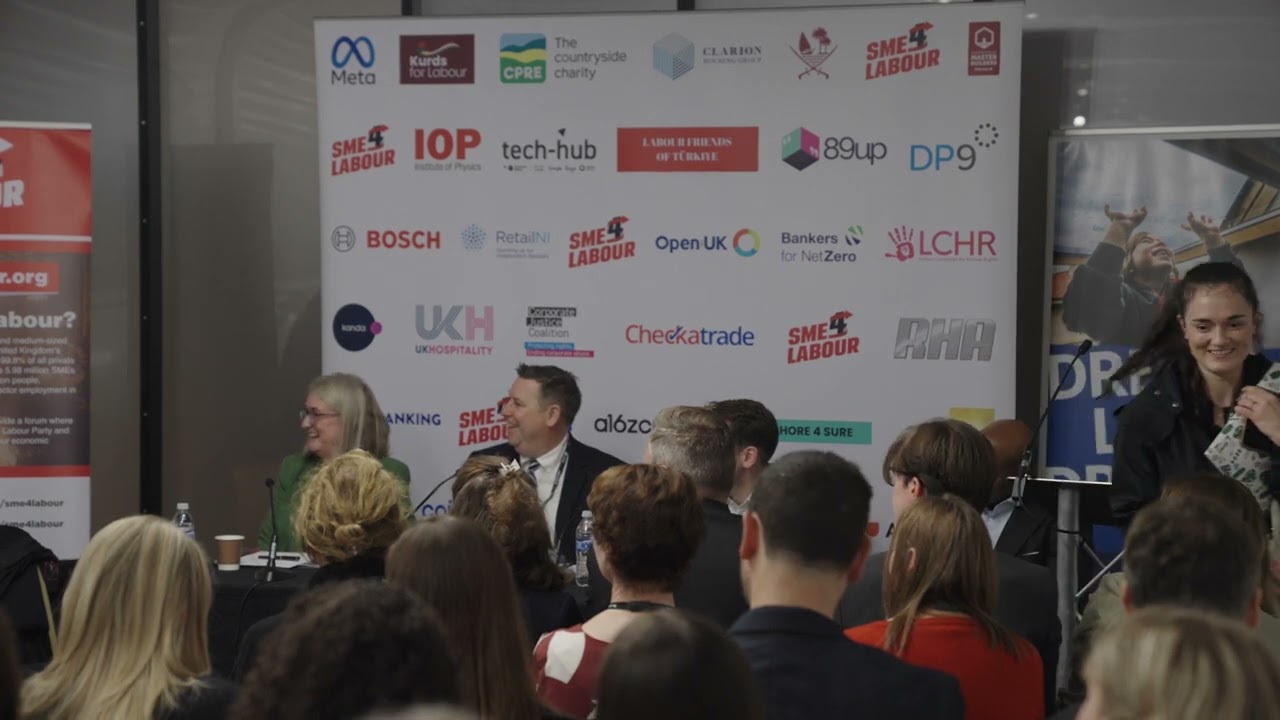
SME4Labour and Checkatrade Fringe: Delivering Growth Through Skills: How Business and Government Can Partner for Prosperity
This panel discussion, chaired by Cllr Stephen Cowan (Leader of LB Hammersmith & Fulham), brought together experts from business, policy, and government to explore the challenges and opportunities of addressing the skills gap in the UK. The session emphasized the importance of training, apprenticeship programs, and vocational opportunities in growing the UK workforce, particularly within small and medium-sized enterprises (SMEs). The panel focused on actionable strategies for closing the skills gap and supporting the green and digital economy transition. Panelists:
- Jambu Palaniappan – CEO, Checkatrade
- Ryan Wain – Tony Blair Institute for Global Change
- The Rt Hon Baroness Smith of Malvern – Minister of State for Skills, Apprenticeships, and Higher Education
- Lord Blunkett – Former Cabinet Minister and Labour MP
- Claire Ward – Mayor of the East Midlands Combined Authority
Chair: Cllr Stephen Cowan, Leader of LB Hammersmith & Fulham
Panel Highlights and Key Topics
-
The Skills Gap and Trade Sector Opportunities:
- Jambu Palaniappan, CEO of Checkatrade, opened the session by highlighting the significant skills gap in the UK's construction sector. He pointed out that Checkatrade connects over 100,000 tradespeople with consumers, generating £7 billion in work annually.
- Palaniappan presented data from a newly publisheded Trade Skills Index, which showed that without intervention, the UK will need 1.3 million new recruits and 350,000 apprentices in the next 10 years to meet the growing demand in construction, housing, and green energy.
- He outlined three main areas for addressing the skills shortage: retaining existing talent, inspiring young people to join the trade sector, and offering flexible training for SMEs to enable upskilling and reskilling.
-
Government's Skills England Initiative:
- The Rt Hon Baroness Smith of Malvern, as the Minister responsible for skills and higher education, underscored the government's commitment to creating a National Skills Strategy. She discussed Skills England, which aims to bring together employers, local authorities, and education providers to address skills shortages and align training with economic goals.
- Smith emphasized the importance of a national framework while maintaining regional flexibility to address local workforce needs. She pointed out that skills are central to meeting the UK’s economic growth, housing, and green transition targets.
-
Political Leadership and the National Mission for Skills:
- Ryan Wain from the Tony Blair Institute framed the skills agenda as a critical political project, emphasizing its role in economic revival and social cohesion. He stressed that cross-government collaboration is key, particularly with businesses and SMEs, to ensure a balanced skills policy.
- Wain suggested making skills funding more accessible and advocated for involving small business perspectives in designing skills programs. He also highlighted the need to use technology and data to personalize learning and create a national culture focused on self-improvement.
-
Support for SMEs and Apprenticeships:
- Panelists recognized that SMEs are essential to the skills ecosystem but face challenges in taking on apprentices due to costs, administrative burdens, and retention issues.
- Lord Blunkett argued for reintroducing financial incentives for SMEs to take on apprentices under 25 and suggested supporting modular training to help workers who may not complete full apprenticeships.
- The discussion emphasized reducing the bureaucracy around the apprenticeship system, developing mentorship and continuous development programs, and providing flexibility in working arrangements for both apprentices and SMEs.
-
Challenges in Retaining Talent and Inspiring the Next Generation:
- The panelists acknowledged the need to inspire more young people to enter trade and vocational careers, with Palaniappan noting that the completion rate for apprenticeships is only one-third. He highlighted Checkatrade’s work in providing career toolkits to schools and collaborating with organizations like the Prince’s Trust to attract underrepresented groups into trades.
- The importance of ensuring the value of apprenticeships is recognized not just at the policy level but also within communities, with support mechanisms to keep young people engaged throughout their training.
-
Adapting to a Changing Economy:
- The panel explored the rapid economic and technological changes facing the UK. Lord Blunkett called for more support to help SMEs adopt technology and use it to improve business processes. He mentioned that training programs should be modular and meet the needs of businesses, rather than relying on pre-set courses.
- The conversation also touched on creating cross-regional collaborations, sharing best practices between local authorities, and recognizing the evolving needs of different sectors and demographics.
-
Flexibility and Lifelong Learning:
- To address the growing need for reskilling throughout people's lives, the panelists discussed the significance of lifelong learning. They mentioned the importance of building on the Lifelong Learning Entitlement to offer opportunities for continuous education and career transitions, particularly in response to new technologies and green economy goals.
- Ryan Wain emphasized that access to learning and reskilling should be a lifelong process, facilitated through supportive policies and funding.
-
Policy and Local Government Involvement:
- There was consensus on the need for local government involvement in delivering the skills agenda, facilitating connections between businesses, education providers, and young people. The panelists advocated for piloting innovative approaches at the local level and scaling up successful models.
- Claire Ward, as Mayor of the East Midlands Combined Authority, echoed the need for collaboration between regions and highlighted the role of local leadership in fostering skills development and economic growth.
-
Mental Health and Barriers to Completing Training:
- The panelists discussed the need for wrap-around support for apprentices and young workers, such as addressing mental health challenges, housing instability, and family issues that often impact completion rates in training programs.
- Life coaching and personalized support systems were proposed to assist apprentices in staying on track and completing their training successfully.
-
Older Workers and Upskilling Initiatives:
- The conversation acknowledged the role of older workers in filling skills gaps and how targeted reskilling programs can help bring experienced professionals back into the workforce or transition to new roles.
- Panelists suggested that policies should account for older apprenticeships and provide support to individuals looking to learn new skills or return to work after a career break.
Conclusion The panel highlighted the critical importance of developing a skills agenda that supports the UK’s growing and changing workforce needs. Emphasis was placed on creating an inclusive and flexible approach to apprenticeships, focusing on SME engagement, lifelong learning, and regional collaboration. By aligning national policies with local needs, fostering public-private partnerships, and supporting both young and older workers, the UK can develop a skills infrastructure that empowers people to thrive in an evolving economy. Key Takeaways:
- Addressing the skills gap requires collaboration across government, businesses, local authorities, and education providers.
- Retaining existing talent, inspiring new entrants, and providing flexible training opportunities are crucial steps in bridging the skills gap.
- Lifelong learning and continuous upskilling are key to adapting to technological change and supporting the green economy transition.