
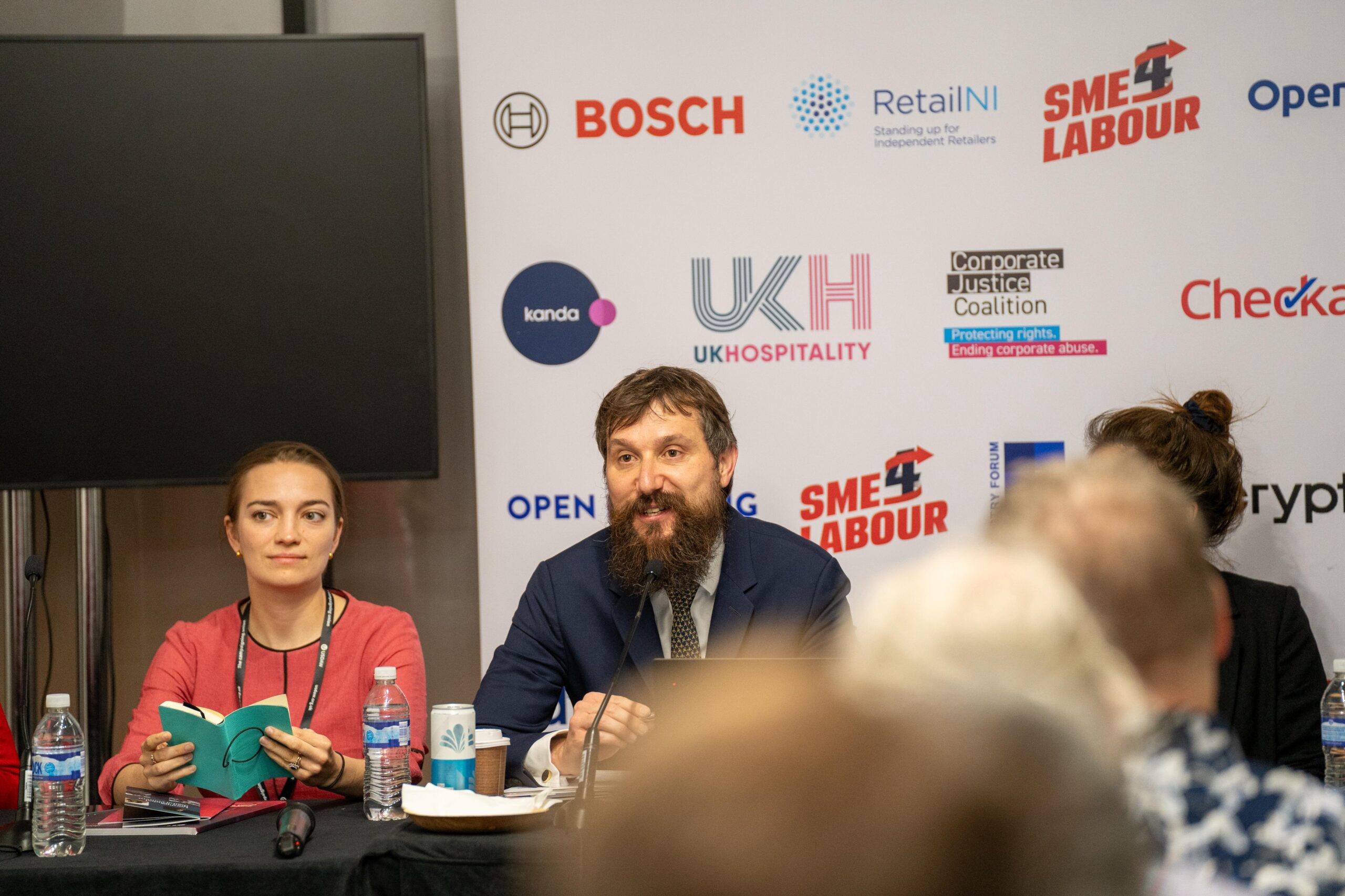
SME4Labour and 89Up Fringe: Human Creativity Meets AI – A Real-time Experiment in Policy Development for the Creative Industries
This event, chaired by Mike Harris from 89Up, explored the intersections between artificial intelligence (AI), creativity, and policy in the UK. The panel consisted of technology entrepreneurs, policy advisors, and politicians discussing how AI is currently being used in creative industries, its implications for the future, and the ethical and policy challenges that need to be addressed. The discussion covered a range of topics including AI's role in enhancing creativity, the UK's position on AI policy, copyright issues, and the impact on social mobility and sustainability. Key Takeaways:
- AI is a powerful tool for enhancing creativity and automating repetitive tasks, but it requires careful ethical and policy consideration.
- The UK has a unique opportunity to lead in AI and creativity by developing fair, inclusive, and transparent policies that align with its global position.
- Ensuring that AI supports human creativity and addresses bias and equity is crucial for sustainable growth in creative and tech industries.
Panel Highlights and Key Topics
-
Understanding AI: Context and Definitions:
- Tom Adeyoola began by describing AI as a term that captures a range of technologies that mimic human intelligence, such as generative AI, which can predict outcomes based on data. He highlighted the importance of generative AI advancements, like those from OpenAI, that leverage cloud computing to process large data sets.
- Danielle Dodoo further simplified AI as systems that process, learn from, and make decisions based on data. She categorized AI into machine learning (e.g., large language models), natural language processing (NLP), and computer vision.
-
AI as a Tool for Creators and Businesses:
- Danielle Dodoo explained how creatives use AI to enhance content creation and streamline workflows, such as using AI for editing, music creation, audience analysis, and advertising. She also differentiated between "creative industries" (traditional sectors like advertising, music, and film) and the "creator economy" (independent content producers using platforms like TikTok).
- The panel discussed how AI serves as a co-collaborator, automating mundane tasks and enhancing human creativity, which allows creators to focus on more innovative and imaginative endeavors.
-
The UK’s Global Position on AI and Policy Challenges:
- Suhair Khan noted the UK's strong position in AI research and development, emphasizing its contributions to scientific advancements. She highlighted the need for value capture from R&D, interdisciplinary collaboration, and synergies between AI and other technologies like quantum computing and biotech.
- Chris Bryant emphasized the UK’s ambition to be a leader in AI and discussed the importance of developing a framework for legal certainty to ensure companies can innovate without fear of unpredictable regulations.
-
Policy and Legal Considerations: Copyright, Transparency, and Incentives:
- Eliza Easton mentioned the need for policies ensuring that creatives are paid fairly and that their copyrights aren't infringed. She pointed to a current court case between Getty Images and Stability AI, which would set a precedent for how existing legal frameworks handle AI-related copyright issues.
- The panel discussed possible regulatory approaches, including transparency requirements for AI-generated content, and the need for the UK to learn from other international examples, such as the EU AI Act, while crafting policies that balance innovation with protection for creators.
-
Ethics, Bias, and Social Equity in AI Development:
- Danielle Dodoo raised concerns about AI perpetuating stereotypes and biases, particularly in image and content generation, which can hinder authentic representation and monetization. She called for inclusive policies and diverse data sets to ensure equitable AI systems.
- The discussion highlighted AI’s potential to democratize creative opportunities by reducing barriers, but also noted the risks, including access issues due to the cost of AI tools and equipment.
-
AI’s Impact on Education, Skills, and Employment:
- Peter Swallow MP discussed the importance of skilling up the workforce to use AI, but also noted that soft skills like empathy, creativity, and critical thinking would remain crucial in a future where AI automates many tasks.
- The panel agreed on the need for lifelong learning and adaptability, with Tom Adeyoola adding that future work will likely require intuitive problem-solving skills rather than coding.
-
Opportunities and Risks for Creative and Tech Industries:
- The conversation touched on the risks of AI accelerating the "winner-takes-all" economy, where a small number of people and companies benefit disproportionately. While AI might make entry-level jobs more accessible, it could also erode traditional pathways into creative sectors, making it harder for newcomers to gain experience.
- Suhair Khan highlighted the UK's competitive advantage in having a rich cultural and creative ecosystem, which should be leveraged in the global AI landscape.
-
AI, Sustainability, and Access to Creative Tools:
- Vicki Williams from the Co-Star Network raised the need to align AI innovation with sustainability goals, considering AI’s reliance on computational power and its environmental impact. The panel agreed on the importance of investing in sustainable AI practices, particularly in industries like fashion.
- There was a consensus that transparency and authenticity in AI use are key. Danielle Dodoo advocated for explicit acknowledgment when AI is used in content creation to build trust and avoid reputational risks.
-
AI and the Future of Creativity: Balancing Innovation and Humanity:
- Chris Bryant pointed out the need for AI to support creativity without replacing the human elements that define art and culture. He emphasized that while AI can produce similar outputs to human creators, it lacks the nuanced, personal connection of human-made works.
- Suhair Khan argued that the changing landscape of creativity would require a new understanding of human imagination, with AI augmenting rather than replacing creative processes.
-
Legal Frameworks, Innovation, and Global Perspectives:
- The panel discussed the need for frameworks that address the rights of artists and copyright holders to safeguard their intellectual property against unauthorized AI use.
- Tom Adeyoola cautioned against regulation that favors large incumbents over smaller innovators, advocating for policies that encourage experimentation and provide opportunities for creators to capture more value from their work.
Conclusion The event concluded on a forward-looking note, emphasizing the importance of balancing AI's potential to enhance creativity with ethical considerations, sustainable practices, and equitable opportunities for all creators. The speakers called for inclusive policies, skills development, and transparent AI practices to ensure that AI serves as a positive force for innovation without compromising human creativity and diversity. Panelists:
- Tom Adeyoola – Technology Entrepreneur and former CEO of a computer vision startup
- Danielle Dodoo – Technologist and Serial Entrepreneur
- Eliza Easton – Founder, Erskine Analysis
- Suhair Khan – Founder of Open-ended and former Product Manager at Google
- Peter Swallow MP – MP for Bracknell
- Chris Bryant – Minister of State at the Department for Science, Innovation and Technology and the Department for Culture, Media, and Sport
Chair: Mike Harris, Founder of 89Up