
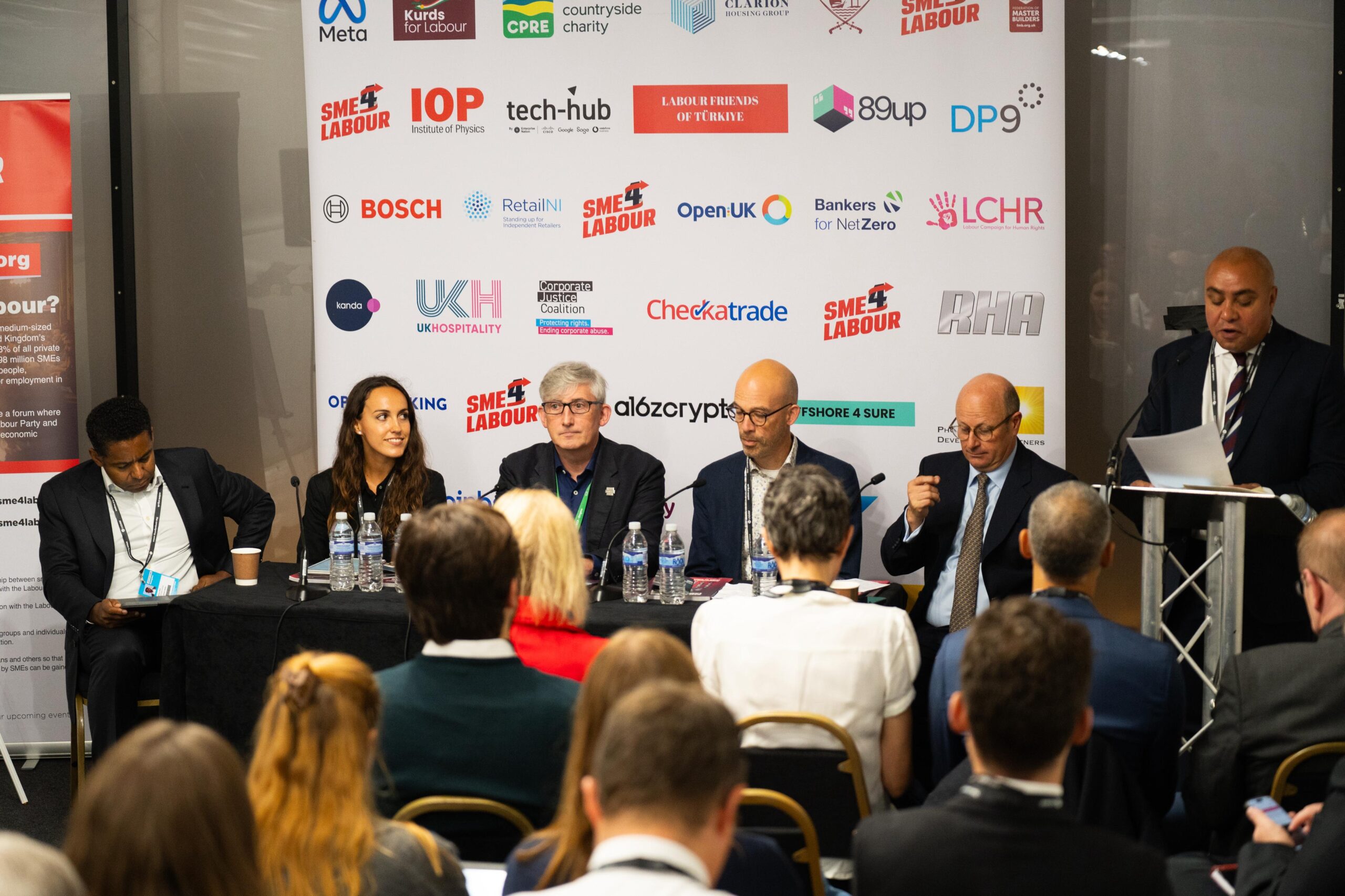
SME4Labour and Open Banking Fringe: Open Banking to Open Energy: Unlocking the Data Economy
This panel discussion, chaired by David Burton-Sampson MP (Southend West and Leigh), took place during a Labour Party event. The focus was on how open banking principles can be extended to sectors like energy to unlock the data economy. Experts from financial regulation, open data, policy, and business highlighted the opportunities and challenges in creating a data-rich environment that benefits consumers, SMEs, and the UK’s journey towards net zero. Key Takeaways:
- Open banking has paved the way for data-sharing in finance, and there is potential to expand these principles to other sectors like energy.
- Collaboration between government, regulators, and private sector players is crucial to establishing data-sharing frameworks that support innovation while maintaining consumer protection.
- The transition to open finance and open energy can significantly support the UK’s sustainability goals and help drive investment into green initiatives.
Panel Highlights and Key Topics
-
Introduction to Open Banking and Smart Data Economy:
- David Burton-Sampson MP introduced the topic, emphasizing the role of open banking in improving competition in financial services. The goal is to expand these principles to other sectors like energy, allowing data-sharing to benefit the wider economy.
-
Reflections on Open Banking's Evolution and Achievements:
- Henk Van Hulle highlighted the success of open banking since its 2018 inception, with over 11 million users and a growing monthly transaction volume. He noted that open banking’s value can be further unlocked by extending data-sharing to other sectors like finance, property, and energy.
- Van Hulle also stressed the importance of the upcoming Digital Information and Smart Data Bill to support future smart data schemes and called for more regulatory frameworks to facilitate cross-sector data sharing.
-
Challenges in Scaling and the Need for Strategic Autonomy:
- Cllr Geoff Barraclough discussed the slow growth of open banking adoption, attributing it to limited support from major banks. He called for creating a consistent brand for open banking, clear scheme rules, and enhanced consumer protections to build trust and simplify user experiences.
- He emphasized the UK’s need to maintain strategic autonomy in payments, especially to ensure that the country does not rely solely on multinational payment companies like Visa and Mastercard.
-
Opportunities and Impact of Data Portability:
- Gavin Starks underscored the transformative potential of data portability, highlighting the importance of smart data for every business and individual. By focusing on real-world use cases, open data can bring value and efficiency to sectors like finance and energy.
- Starks discussed the development of open energy and the significance of establishing a cohesive data-sharing framework between financial and real-economy sectors. He encouraged organizations to engage actively in data-driven innovation.
-
Role of Data in Achieving Net Zero Goals:
- Elena Pérez Celis highlighted how open banking principles can support the transition to net zero by enabling better access to green finance, particularly for SMEs. She addressed the current challenges with data inconsistency and the proliferation of carbon reporting tools, which hinder investment decisions.
- Pérez Celis advocated for creating a data-sharing ecosystem with standardized data points for SMEs and seamless integration across financial systems to drive sustainable finance and investment.
-
Balancing Innovation, Competition, and Consumer Protection:
- Sheldon Mills of the FCA shared insights on advancing open finance and open energy while ensuring consumer protection. He discussed how open data can enhance choice and efficiency for consumers but requires ethical use, data protection, and clear dispute resolution mechanisms.
- Mills emphasized that moving towards a data-rich economy also involves creating a national strategy for digital identity to facilitate data-sharing, improve user experiences, and ensure trustworthiness.
-
Developing Open Energy and Financial Sector Collaboration:
- Gavin Starks elaborated on how open energy initiatives can align with open banking principles. He shared examples of ongoing work with Icebreaker One, which aims to streamline carbon reporting and facilitate green lending by automating data sharing from smart meters to financial institutions.
- Starks pointed to the potential of data-sharing frameworks to support the UK’s carbon reduction targets and accelerate green finance, enabling SMEs to access funding with the "click of a button."
-
The Need for Trust, Branding, and Awareness:
- Geoff Barraclough and other panelists agreed on the need for a clear, standardized brand for open banking, alongside trust frameworks that protect consumers and prevent fraud.
- The creation of a digital identity was identified as crucial for verifying individuals in a secure and efficient manner, which would support the wider adoption of data-sharing technologies.
-
Funding and Investment for Smart Data Expansion:
- Audience questions addressed funding challenges for open banking’s future. Sheldon Mills explained that open banking is currently in an interim phase, awaiting regulatory legislation to provide a clear mandate for expanding into other sectors.
- Mills and Henk Van Hulle highlighted the importance of transparent and strategic investment to support the development of a sustainable commercial framework that ensures open data’s longevity and effectiveness.
-
Government's Role in Advancing Smart Data and Open Finance:
- The Digital Information and Smart Data Bill was emphasized as a key driver for expanding open banking to open finance and other sectors. Panelists called for strong collaboration between government, regulators, and the private sector to realize the potential of smart data frameworks.
- David Burton-Sampson MP reaffirmed the government's commitment to advancing open banking and open data, noting its inclusion in The King's Speech and the Labour Party’s proactive support for digital transformation.
Conclusion The event underscored the potential for open banking principles to be adapted for sectors like finance and energy, fostering innovation, competition, and consumer benefit. The panelists agreed on the importance of standardization, consumer trust, sustainable funding, and government support to advance smart data and contribute to the UK's net-zero goals. Developing frameworks for data-sharing, creating a strategy for digital identity, and fostering cross-sector collaboration were seen as essential next steps for a successful data economy. Panelists:
- Sheldon Mills – Executive Director, Financial Conduct Authority (FCA)
- Elena Pérez Celis – Head of Policy and Public Affairs, B4NZ (Business for Net Zero)
- Henk Van Hulle – CEO, Open Banking Limited
- Gavin Starks – Founder and CEO, Icebreaker One
- Cllr Geoff Barraclough – Cabinet Member for Planning and Economic Development, Westminster City Council
Chair: David Burton-Sampson MP